
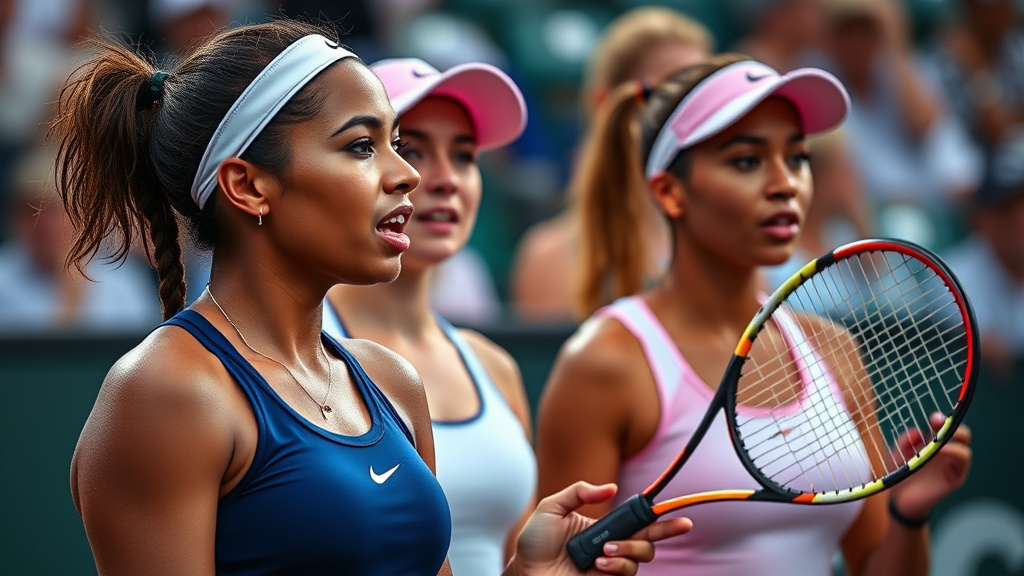
For years, women’s tennis players have competed with the same competitive drive and talent as their male counterparts, yet earned far less prize money at major tournaments. Now, prominent competitors are pushing back, calling for the same prize money for equal performance. This rising momentum challenges the historical pay inequality that has long plagued professional tennis, raising critical questions about equal treatment in sports. As these powerful voices unite, they’re changing the dialogue around justice, visibility, and the genuine importance of women’s athletic excellence on the international spotlight.
The Push for Fair Prize Compensation
The gap between prize money between male and female tennis players has become progressively unsustainable in today’s sporting landscape. Women’s champions at Grand Slam tournaments have historically received significantly reduced payouts than their male rivals, despite producing equally engaging performances and attracting massive global audiences. This compensation gap sends a concerning signal about how society assesses women’s athletic achievements, prompting top players to demand transparent accountability and just reward structures.
Leading tennis governing bodies have started recognizing these imbalances, with some top-tier events adopting equal prize money measures in recent years. However, progress remains uneven across various tournaments and regulatory organizations. Players argue that true equality requires uniform pay across all top competitions, not targeted programs. The campaign has grown stronger through deliberate campaigns, public awareness efforts, and unified player statements that highlight the absurdity of paying women less for comparable results.
Beyond monetary rewards, this battle represents a broader movement for visibility and esteem within professional sports. Equal monetary awards symbolizes equal value, equal opportunity, and equal respect for female athletes’ impact on the sport. As players remain committed to systemic change, they’re inspiring conversations about gender equity across all sporting disciplines, challenging outdated traditions and pressing for compensation structures align with contemporary standards of equity and diversity.
Historical Inequalities and Advancement
The wage disparity between genders in competitive tennis has deep historical roots, stemming from old-fashioned beliefs about audience interest and market potential. For most of tennis’s history, top-tier competitions distributed significantly lower prize pools to women’s competitions, despite comparable viewership and sponsorship revenue. This disparity became increasingly indefensible as women’s tennis competitions produced significant income and drew global audiences. Historic milestones, such as the 2007 Wimbledon decision to match prize purses, showed that pay equality was achievable and warranted, catalyzing broader changes across the sport.
Despite these victories, substantial gaps remain at several prestigious tournaments worldwide. The Australian Open and French Open have achieved full pay equality, while other major events continue offering unequal compensation. Players like Serena Williams and Naomi Osaka have leveraged their platforms to advocate for systemic change, inspiring a new generation of athletes to demand fair treatment. Their persistent activism has shifted cultural conversations, proving that progress requires continuous pressure and unwavering commitment|dedication|resolve to gender equity in professional sports.
Current Challenges and Future Outlook
Despite considerable advancement in recent years, women’s tennis players continue to face substantial obstacles in their pursuit of pay equality. Major tournaments still distribute unequal budgets for men’s and women’s competitions, with some events justifying disparities through outdated audience and ratings arguments. However, these claims no longer hold merit as women’s matches consistently draw impressive audiences and generate substantial broadcasting revenue, challenging the legitimacy of traditional compensation structures.
- Continuous wage disparities between genders at Grand Slam tournaments remain pronounced
- Media coverage disparities continue to diminish the value of women’s competitive play
- Sponsorship opportunities stay heavily favoring male players
- Tournament organizers resist implementing equitable prize structures
- Global advocacy initiatives are driving transformation in professional tennis
Looking ahead, the outlook of women’s tennis appears increasingly promising as momentum builds toward genuine equality. Younger generations of players are increasingly outspoken and unified in their demands, while growing public support strengthens their bargaining power. Several tournaments have already committed to equal prize money, establishing standards that pressure remaining events to follow suit, suggesting that full wage parity in professional tennis may finally materialize within the coming years.
